Well we have had a really rainy November, JPa's last visit to the Outside Classroom although good fun and productive we had to hop over the puddles. The ground was water logged and somewhat spongy. December has greeted us with marginally dryer weather, but much lower temperatures so between the OC being reclassified as a swamp for a while and the students being happy (for a change haha) to arrive at school and be inside and warm JPa have not gone out for a fair few days.
Luckily for us we have onions and garlic growing and they do not require our attention, and will happily grow without a visit from JPa.
In the Classroom and around the school we are now feeling the pressure and excitement of the festive season approaching and I seem to have a hive of activity around me. From getting sugar paste cake decorations made and cake boards sorted for the year 8 yule log's and trying to see if we can fit in a Christmas cook for the other year groups. I have admit finding out we only had two weeks left of school took me by surprise. Which was of course bitter sweet, I panicked thinking 'how will I get everything done' and then I happily thought 'Oh that means its nearly Christmas time'.
Thursday, 4 December 2014

Friday, 21 November 2014
Out in force
This morning JPa went out to the garden to carry on digging up the weeds surrounding the plots, and this morning we met students from other tutor groups for the first time this year. This is the first morning we have met up with another group, and it has reminded us that we have to share the equipment in the garden shed. Well it was a bit of a wake up call. Now we have to make up a rota for the new tutor group so that we aren't going to the OC as whole group. Otherwise we will take all of the tools so that there is nothing left for the other tutor groups or we share (begrudgingly) the tools and have students with nothing to do.
Today is the first attempt at a break time visit, the weather is looking promising, if cold and grey can look promising (haha). We plan to meet at 11 at the tool shed and go on from there. I shall let you all know how it goes.
Today is the first attempt at a break time visit, the weather is looking promising, if cold and grey can look promising (haha). We plan to meet at 11 at the tool shed and go on from there. I shall let you all know how it goes.
Wednesday, 19 November 2014
Moon planting
I don't think we can trace moon planting back to it's original source, but the ancient Egyptians were known to use the lunar calendar when farming as well as the Babylonian's. Man has used the sun, the moon and the stars to tell time, days and to navigate so it is not much of a jump to hear that the moon could help you farm.
It is apparent the different plants grow better in certain phases of the moon. In the same way that the moon affects the tides, it affects the moisture in the soil, pulling it to the surface. Some plants need to concentrate on the root system more than others and some have to put more effort into the leaves or fruits above ground.
A rough guide:
There are three methods for planting by the moon. The Synodic, or waxing and waning cycle, the Sidereal, and the Biodynamic cycle. The simplest one being the Synodic method. This is the only one I have ever used, I have had success with this method, and I often wonder when friends tell me something along these lines: 'The first seeds I planted grew really well but the next lot were small and some died' if it was just down to the moon phase.
At the new moon (cannot see a moon, or only a small crescent on the right), the lunar gravity pulls water up, this is good for above and below ground growth. This is the best time for planting above ground annual crops that produce their seeds outside the fruit. Examples are lettuce, spinach, celery, broccoli, cabbage, cauliflower, and grain crops. Cucumbers like this phase also, even though they are an exception to that rule.
In the second quarter (right hand side crescent moon up until full moon) the gravitational pull is less, but the moonlight is strong, creating strong leaf growth. The types of crops that prefer the second quarter produce above ground fruits with their seeds inside, such as beans, melons, peas, peppers, squash, and tomatoes. Also this is a good time to mow your lawns if you are trying to increase growth.
After the full moon, as the moon wanes, the energy is drawing down. The gravitation pull is high, creating more moisture in the soil, but the moonlight is decreasing, putting energy into the roots. This is a good time for planting root crops, including beetroot, carrots, onions, and potatoes. It is also good for perennials, biennials, bulbs and transplanting because of the active root growth. Pruning can be done now as well.
In the fourth quarter (crescent moon on the left) there is decreased gravitational pull and moonlight, and it is considered a resting period. This is also the best time to cultivate, harvest, compost, transplant and prune. Mow lawns in the third or fourth quarter to retard growth.
I recommend giving this a go, I think it speeds things up and gives good results. For example if you plant carrots after the full moon the root system is drawn down sooner, and the root just happens to be the desirable part of the plant.
It is apparent the different plants grow better in certain phases of the moon. In the same way that the moon affects the tides, it affects the moisture in the soil, pulling it to the surface. Some plants need to concentrate on the root system more than others and some have to put more effort into the leaves or fruits above ground.
A rough guide:
There are three methods for planting by the moon. The Synodic, or waxing and waning cycle, the Sidereal, and the Biodynamic cycle. The simplest one being the Synodic method. This is the only one I have ever used, I have had success with this method, and I often wonder when friends tell me something along these lines: 'The first seeds I planted grew really well but the next lot were small and some died' if it was just down to the moon phase.
At the new moon (cannot see a moon, or only a small crescent on the right), the lunar gravity pulls water up, this is good for above and below ground growth. This is the best time for planting above ground annual crops that produce their seeds outside the fruit. Examples are lettuce, spinach, celery, broccoli, cabbage, cauliflower, and grain crops. Cucumbers like this phase also, even though they are an exception to that rule.
In the second quarter (right hand side crescent moon up until full moon) the gravitational pull is less, but the moonlight is strong, creating strong leaf growth. The types of crops that prefer the second quarter produce above ground fruits with their seeds inside, such as beans, melons, peas, peppers, squash, and tomatoes. Also this is a good time to mow your lawns if you are trying to increase growth.
After the full moon, as the moon wanes, the energy is drawing down. The gravitation pull is high, creating more moisture in the soil, but the moonlight is decreasing, putting energy into the roots. This is a good time for planting root crops, including beetroot, carrots, onions, and potatoes. It is also good for perennials, biennials, bulbs and transplanting because of the active root growth. Pruning can be done now as well.
In the fourth quarter (crescent moon on the left) there is decreased gravitational pull and moonlight, and it is considered a resting period. This is also the best time to cultivate, harvest, compost, transplant and prune. Mow lawns in the third or fourth quarter to retard growth.
I recommend giving this a go, I think it speeds things up and gives good results. For example if you plant carrots after the full moon the root system is drawn down sooner, and the root just happens to be the desirable part of the plant.
Leafmould
Leafmould is a brilliant soil replenishment. Used on its own makes a brilliant compost to plant seeds in, dug into the plot brings nourishment and mixed with sharp sand makes good potting compost. The best bit about leafmould is it is free!
Basically collect lots of leave that fall from trees in autumn and store them, slightly damp for two years either in holey bin bags or in a purpose made compost bin (it needs to be aerated so a compost bin like the council sell might not be ideal) using chicken wire or something similar nailed around a wooden frame. After the two years are up the leaves should have rotted down nicely and are ready for use.
The best leaves to use (because they rot down quickest) are Oak, Beech and Hornbeam. I'm not sure about the other trees, but I know for certain there are Oak trees on school property and we walk underneath one on the way to the OC.
I think I need to have a word with the 'powers that be' if this can be done, either somewhere we can store/hide away the bin bags or maybe convince Resistant materials so make us a leafmould bin. Cross your fingers for me.
Basically collect lots of leave that fall from trees in autumn and store them, slightly damp for two years either in holey bin bags or in a purpose made compost bin (it needs to be aerated so a compost bin like the council sell might not be ideal) using chicken wire or something similar nailed around a wooden frame. After the two years are up the leaves should have rotted down nicely and are ready for use.
The best leaves to use (because they rot down quickest) are Oak, Beech and Hornbeam. I'm not sure about the other trees, but I know for certain there are Oak trees on school property and we walk underneath one on the way to the OC.
I think I need to have a word with the 'powers that be' if this can be done, either somewhere we can store/hide away the bin bags or maybe convince Resistant materials so make us a leafmould bin. Cross your fingers for me.
Enthusiastic helpers
Whilst out in the Garden this morning, the students once again asked:
"Miss can we come out at break or lunch to do some more gardening?" Well bearing in mind all the 'gardening' we are doing currently is digging up and weeds surrounding our vegetable plot, what a wonderful thing to hear. This is music to my ears because some mornings when it is cold and grey and we say "we are off to the garden, keep your coats on" I worry that some (or all) of the students would rather stay inside in the warm and not outside and put to work.
We are going to try a garden visit on Friday break time weather permitting, so watch this space!
"Miss can we come out at break or lunch to do some more gardening?" Well bearing in mind all the 'gardening' we are doing currently is digging up and weeds surrounding our vegetable plot, what a wonderful thing to hear. This is music to my ears because some mornings when it is cold and grey and we say "we are off to the garden, keep your coats on" I worry that some (or all) of the students would rather stay inside in the warm and not outside and put to work.
We are going to try a garden visit on Friday break time weather permitting, so watch this space!
Sunday, 9 November 2014
JPa planted winter onions and garlic
We chose these because not only will they grow over the winter when the plot would otherwise be empty but they don't need any attention, and as the weather has not been up for many visits to the OC this has been a real help.
When we get the chance (when it is dry and the register is not too full of notices) we go out to the garden to do a bit of weed control.
The whole tutor takes part, armed with forks, spades, gloves and trowels we head out to war against the weeds. With much gusto the greenery is soon flying onto the compost heap,. We have been trying to clear the gravelled area (although it is growing back quicker than we can cut it down) and hopefully as the winter continues our efforts will succeed as the plant growth slows.
We put a sack of manure on out patch and raked it over. As you can imagine the students LOVED that, all holding their noses and trying to look busy doing other jobs, suddenly the gravel all the way over by the gate was super interesting.
Planting the bulbs could not have been easier, we made a hole, put in a bulb, roots down and slightly covered with soil, done. The don't need to be watered or watched. They might need weeding from time to time and that's it! A brilliant crop to plant for the winter, with the only downfall being that the patch of earth cannot grow this crop again for 6 years.
The onions and garlic have already created shoots, and I am looking forward to reaping what we sow! These crops should be ready for lifting in the late spring, and therefore just in time for planting out the next season's crops and seeds.
When we get the chance (when it is dry and the register is not too full of notices) we go out to the garden to do a bit of weed control.
The whole tutor takes part, armed with forks, spades, gloves and trowels we head out to war against the weeds. With much gusto the greenery is soon flying onto the compost heap,. We have been trying to clear the gravelled area (although it is growing back quicker than we can cut it down) and hopefully as the winter continues our efforts will succeed as the plant growth slows.
We put a sack of manure on out patch and raked it over. As you can imagine the students LOVED that, all holding their noses and trying to look busy doing other jobs, suddenly the gravel all the way over by the gate was super interesting.
Planting the bulbs could not have been easier, we made a hole, put in a bulb, roots down and slightly covered with soil, done. The don't need to be watered or watched. They might need weeding from time to time and that's it! A brilliant crop to plant for the winter, with the only downfall being that the patch of earth cannot grow this crop again for 6 years.
The onions and garlic have already created shoots, and I am looking forward to reaping what we sow! These crops should be ready for lifting in the late spring, and therefore just in time for planting out the next season's crops and seeds.
An amazing harvest
This harvest took place in September 2014. This meant the JPa had a new tutor group, the year 9's of last year had moved onto to upper school and the new group are currently year 8.
Well what a great way to get the new students hooked on the garden project. the first job that they had to do was pick tomatoes, dig potatoes and cut off courgettes, these lucky young people got to reap the benefits of the last years tutors hard work.
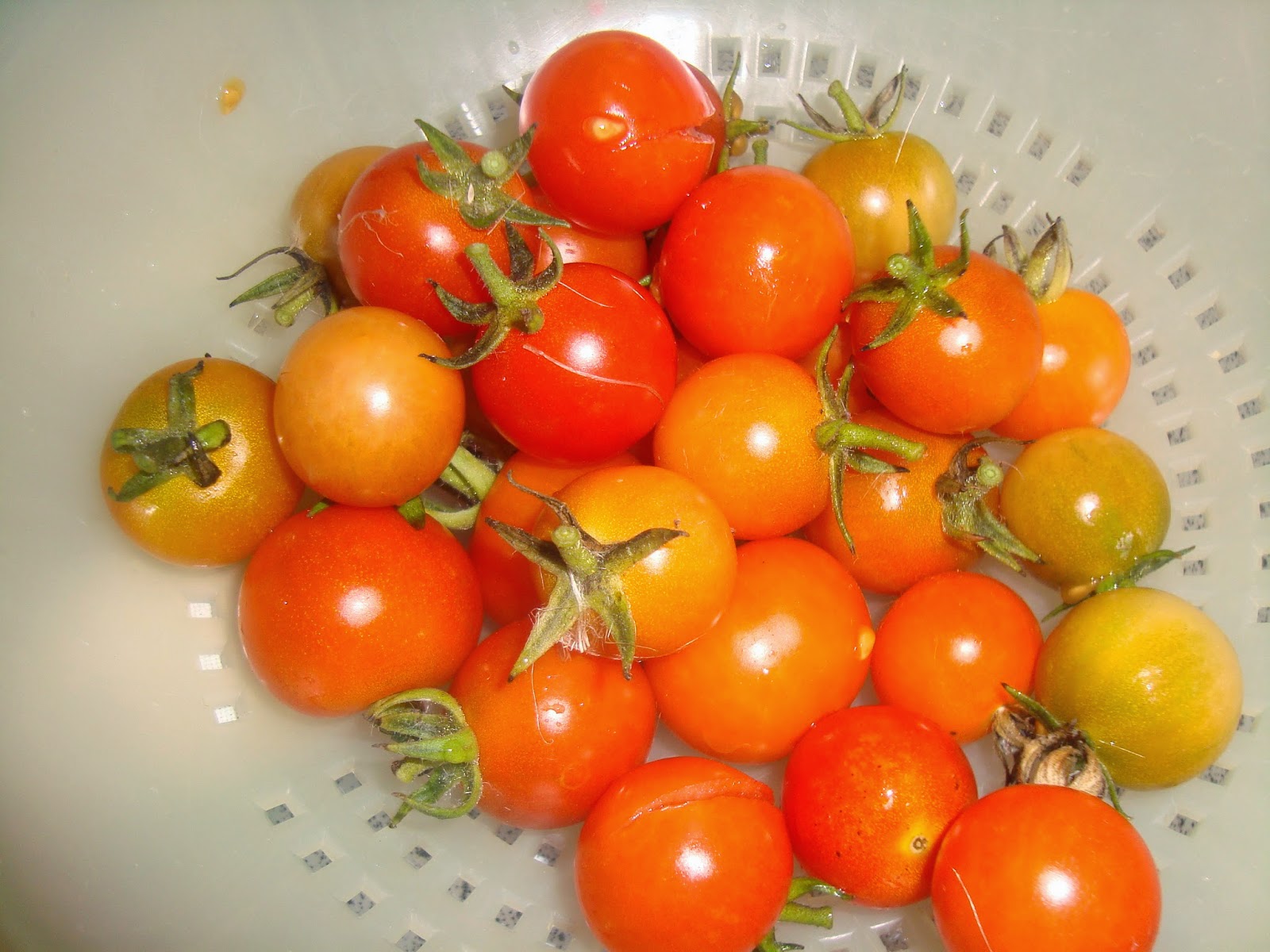
We could not have been happier with this amazing harvest. There were lots of different types of courgettes, green, orange, yellow and white. Long, short, round and frilly! We had so many tomatoes and these pictures are just the last ones that were harvested. The green tomatoes were soon red because we put them on a sunny window sill to ripen up.
We are thinking that once again we will make the potato wedges because the students liked them so much, and the other vegetables might go to staff as the students were impressed with them, but not that keen to eat them (no surprises there).




Subscribe to:
Posts (Atom)